At first glance, it looks like a simple test for children, but this visual puzzle has left thousands of internet users scratching their heads in absolute frustration. Four identical glasses sit before you, each filled to the brim with water, yet each one holds a different object submerged within. The question is deceptively straightforward: which glass actually contains the most water? Most people answer within seconds, confident in their choice, only to realize they’ve been completely tricked by their own eyes. Are you truly seeing what you think you see, or has your brain fallen for a classic, sophisticated scientific trap?The puzzle presents four glasses—labeled A, B, C, and D—that appear to be filled to the exact same level. Inside Glass A sits a tiny paperclip; in Glass B, there is a large baseball; Glass C holds a standard eraser; and Glass D contains a bulky wristwatch. At first glance, the human brain instinctually assumes that because the water levels are identical, the volume of water must also be identical. This is the moment the trap snaps shut. We are wired to trust our visual perception, to take the world at face value, and to rely on quick, heuristic processing to solve problems. In reality, the answer has absolutely nothing to do with the water level and everything to do with the fundamental scientific principle of displacement.To crack this puzzle, you have to shift your thinking from the visual to the physical. Displacement is the concept that an object submerged in a fluid will take up space, effectively pushing that fluid out of the way. The volume of the object is directly proportional to the amount of water it displaces. Therefore, in a container of a fixed size, the amount of space available for water is the total volume of the container minus the volume of the submerged object. If the container is already full to the brim, the object literally takes the place of the water that would otherwise be there. When we apply this principle, the puzzle transforms from a visual trick into a logical deduction. The baseball in Glass B is the largest object, meaning it occupies a significant portion of the glass’s internal space, leaving very little room for water. The eraser in Glass C and the wristwatch in Glass D are also substantial, displacing more water than a tiny object would. Glass A, however, contains a paperclip—the smallest and least voluminous item by a wide margin. Because the paperclip occupies the least amount of space inside the glass, it allows the greatest volume of water to remain. Therefore, even if the glasses appear equally full from the outside, Glass A is undeniably the one that holds the most water.

Related Posts

Why a Cincinnati bride’s landlord walked her down the aisle
At a wedding in Cincinnati, a touching and unexpected moment captured the hearts of many when 79-year-old landlord Gil Pulliam walked his tenant, Shacole Fox, down the…
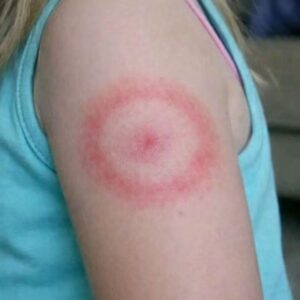
My Daughter Woke Up With a Strange Red Ring on Her Arm: A Parent’s Guide to Ring-Shaped Rashes (And When to Breathe Easy)
Seeing a ring-shaped red rash on your child’s arm can be alarming, but many circular rashes are not medical emergencies. The first step is to stay calm…

Surprising health benefits of onions
Onions are a staple ingredient in many kitchens, valued for both their flavor and nutritional benefits. They add a crisp bite to salads when eaten raw and…

Heres how Jeanetta just helped the Nolan Wells’ case.
Independent audio engineer Jeanetta Brantley has attracted widespread attention after enhancing audio from a boat recording that has circulated online in connection with the death of Nolan…

Child star Mara Wilson, 38, left Hollywood after ‘Matilda’ as she was ‘not cute anymore’
Mara Wilson became one of Hollywood’s best-known child stars during the 1990s, charming audiences with standout performances in Mrs. Doubtfire, Miracle on 34th Street, and Matilda. Although…

The Surprising Opinion Most People Have About Nurses’ Uniforms
The “best” nurse uniform depends on the specific demands of the healthcare environment, but some styles are generally more practical than others for everyday clinical work. In…